Writers’ lives
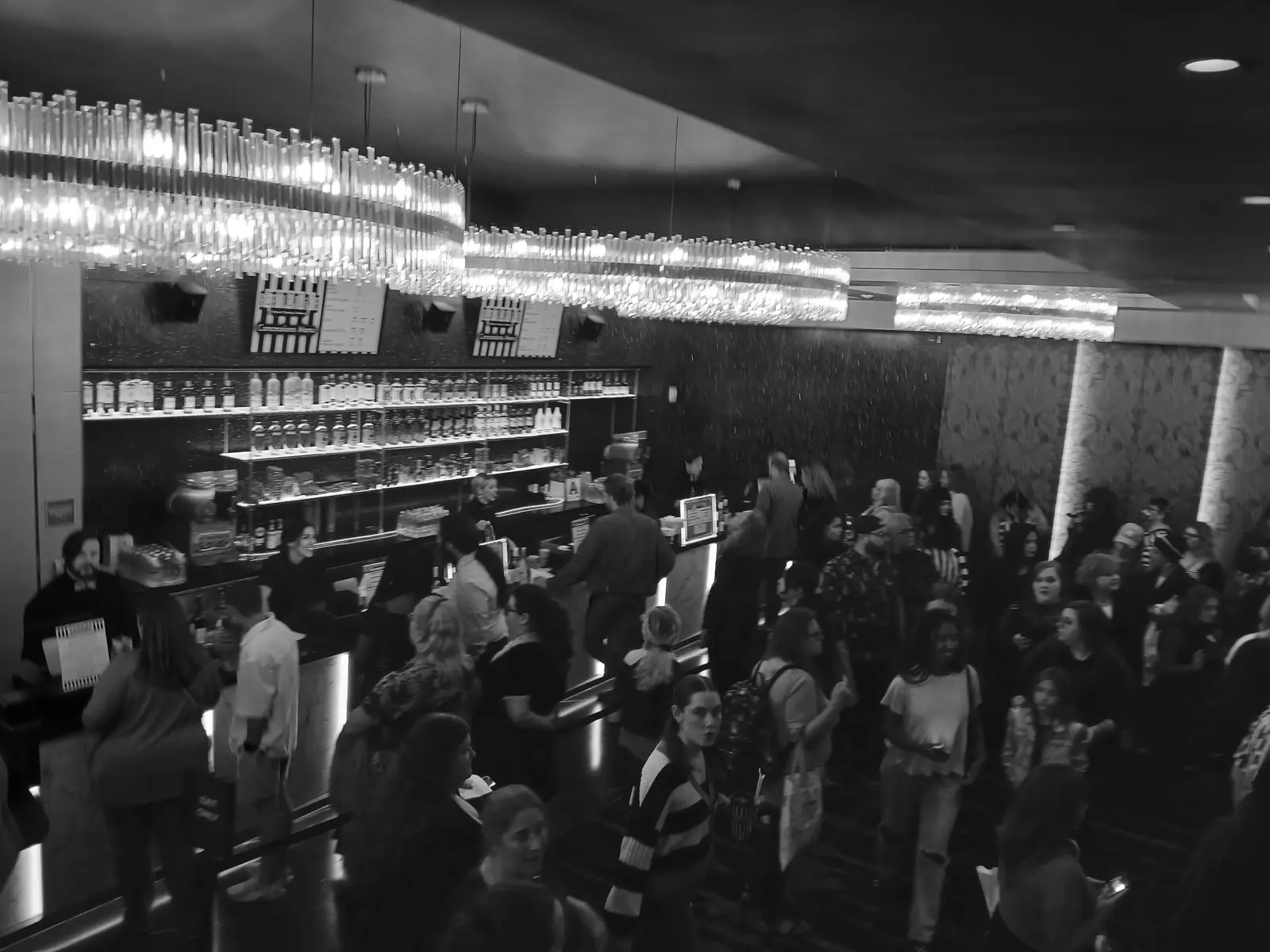
INT. THEATER BAR - NIGHT
Everyone has a first scene
A play written on bar napkins, a serial killer dreamed up in a record store, a TV series that began as a ten-minute favor. How famous screenwriters got into the business, or rather, how the business found them.
By the Scriptopus Mag desk · Edited by Umut5 Nov 202613 min read
What came of it: A Few Good Men
What came of it: Se7en
What came of it: Reservoir Dogs
What came of it: People on Sunday
What came of it: Sicario
What came of it: Fleabag
What came of it: a competition, a judge
What came of it: Silkwood
Nobody is born a screenwriter, though the biographies of famous ones can make you wonder. Between the awards, the box-office records and the famous lines, how these writers got their start usually gets a sentence or two.
Those first steps are often the best part of the story. Almost none of them graduated from a screenwriting school and knocked on a door. They started behind a bar, in a shop, in a newsroom, on a night at the theater, or the morning after they quit a job in a rage.
OneThe day job is material, not the enemy
Aaron Sorkin: a play written on napkins
In his twenties, trying to make it as an actor in New York, Sorkin tended bar in Broadway theaters. He says he wrote much of A Few Good Men on cocktail napkins at the Palace Theatre while the first act of La Cage aux Folles was playing. With the audience inside, the bar was empty, and Sorkin had a few hours a night to write.
The play opened in 1989. The film rights sold before it even reached the stage, and Rob Reiner's 1992 film, with Tom Cruise and Jack Nicholson, got four Oscar nominations, including Best Picture. A bartender's napkins turned into one of Hollywood's most famous courtroom scenes.
Andrew Kevin Walker: the serial killer in the record store
Walker was an assistant at a production company in New York. Tired of the long, unpredictable hours, he quit and took a job as a clerk in a big Manhattan record store. He stayed about three years, and those are the years he wrote Se7en. He did his research after his shifts, and once he started writing, he had a finished script in about five months.
Anyone writing around a day job today should hear what Walker says about that time. A full-time job slowed his writing down, he says, but it didn't make it impossible. And the bleak, rain-soaked, nameless city of Se7en owes a lot to how lonely he felt in New York back then. A day job doesn't stop the writing. Sometimes it supplies the material.
Quentin Tarantino: the video store school
Tarantino's film school was the small video rental store in California where he worked. He spent years there, watching every kind of movie on the shelves and talking films for hours with customers and coworkers. He wrote his first scripts in those years too. He sold two of them, and they opened the door to Reservoir Dogs, the first film he directed himself. The “I steal from every single movie ever made” attitude we looked at in our piece on homage and theft may well have started on those shelves.
Charlie Kaufman: the back room of a newspaper
Charlie Kaufman, the story goes, spent years writing scripts that went nowhere while he worked in the circulation department of a Minneapolis newspaper. During that time he wrote spec episodes of TV shows, and eventually he landed a staff job on a TV comedy. In our piece on failure we told how Being John Malkovich went from a script nobody wanted to an Oscar nomination. Before that one, though, came years of scripts that nobody read.
TwoThe ones who came from another life
Billy Wilder: reporter and dance partner
Billy Wilder was supposed to study law. He became a reporter in Vienna instead. In 1926 he interviewed a famous bandleader, joined his tour and rode it to Berlin. There he freelanced, covering crime and sports, and for a while he also worked as a paid dance partner in hotels. Then he got into the movies, and between 1929 and 1933 he worked on a dozen German films. One of them was People on Sunday, made with a group of young filmmakers who would later become famous.
When Hitler came to power, Wilder left Germany, first for Paris and then, in 1934, for Hollywood. Reporting had given him a sharp eye, an ear for how people really talk and a knack for setting up a story in a few sentences. With those he wrote some of the sharpest dialogue of the next fifty years.
Nora Ephron: from the news to the screen
Nora Ephron's parents were both screenwriters, but she made her name first as a journalist and essayist. Her first big script, Silkwood (1983), told a true story and earned her her first Oscar nomination. Then came When Harry Met Sally... The famous rule she got from her mother, “everything is copy,” was her method as a journalist and became her signature as a screenwriter.
John Hughes: from advertising to teen films
John Hughes started out as a copywriter at an ad agency, then moved on to writing for the humor magazine National Lampoon. The two jobs taught him two things: how to write short lines that stick, and how to write very fast. He turned out the best-loved teen movies of the eighties one after another, famously fast.
Taylor Sheridan: a raise turned down
Taylor Sheridan spent years as an actor. On Sons of Anarchy he played the town's deputy police chief for the first two seasons. After season two he asked to be paid the same per episode as some of the other actors. The producers offered less. Sheridan turned it down and walked. His character was killed off in the first episode of the next season.
Sheridan has called that moment the turning point of his career. He realized, he says, that his value to them was being “eminently replaceable,” saw that the power belonged to the people telling the stories, and decided to write his own. Then came Sicario, Hell or High Water and Yellowstone. Sometimes a door slamming on one career is the way into another.
Sheridan asked for a raise, didn't get it and quit. The next day he wasn't an actor anymore. He was a screenwriter.
ThreeFrom the stage and the mic
Phoebe Waller-Bridge: a ten-minute favor
Fleabag started as a favor to a friend. The friend had a ten-minute hole to fill in a comedy night she was running. Waller-Bridge didn't want to do stand-up, so her friend sold it to her as a story she could tell sitting down. In a few days Waller-Bridge wrote a monologue that stayed funny until the very end, where it turned and hurt.
Her friends then pushed her to make it a full-length play. She later called it “the best kind of bullying from my friends ever.” The play ran for a month at the Edinburgh Fringe and won an award. Then came the BBC series, which years later won six Emmys. Sometimes the first scene of a career runs ten minutes.
Jordan Peele: from sketches to an Oscar
For years Jordan Peele was known for sketch comedy, and the sketch show he made with his partner found a huge audience. His first feature script was something else entirely: a horror film. Get Out came out in 2017 and won Peele the Oscar for Best Original Screenplay. He was the first Black screenwriter to win it. And he proved that comedy's timing and its feel for surprise make a strong foundation for horror too.
FourFinding a reader
Vince Gilligan: a competition and a judge
In 1989, while he was a film student at New York University, Vince Gilligan won the state of Virginia's screenwriting competition. One of the judges was the well-known producer Mark Johnson. Johnson liked the script so much that he called Gilligan the most creative writer he had read, and started working with him. That relationship got Gilligan his first films.
His real break, though, came out of being a fan. He loved The X-Files, so he wrote an episode nobody had asked for and sent it in. It was made in the show's second season. Over the next few years Gilligan wrote another twenty-plus episodes, and that road led to Breaking Bad. The representation catch-22 we covered in our piece on agents? Gilligan broke it with a competition and a fan's script.
Anita Loos: a script sent by post
This one goes back to the early days of film. In 1912, in her early twenties, Anita Loos wrote a script and mailed it to one of the big film companies of the day. The story goes that it sold for a few dollars and D. W. Griffith shot it. Loos went on to become one of the best-paid screenwriters of her time. So even a century and more ago, the door opened the same way: a script, and someone who read it.
And Diablo Cody
As we told in an earlier piece, Diablo Cody was found by a manager. He had been reading her blog, and he asked whether she had ever thought about writing a screenplay. Her first script was Juno, and it won an Oscar.
FiveWhat these stories have in common
- Observation
Nobody started out as a screenwriter.
Bartender, sales clerk, journalist, actor, student, copywriter. The job found them while they were busy doing another one.
- Observation
The day job is material.
Sorkin's theater bar, Walker's New York loneliness, Wilder's newsroom, Tarantino's shelves. All of it leaked into the scripts.
- Observation
The first scene can be small.
Waller-Bridge's ten minutes, Sorkin's napkins, Gilligan's single episode. A big career can start with something small.
- Observation
One reader changes everything.
Mark Johnson, Mason Novick, the producer who bought Sorkin's play. In every story, somebody had to read a page.
- Observation
Finishing beats starting.
Walker finished in five months, Waller-Bridge in a few days. None of them went knocking with half an idea.
- Observation
Anger can be fuel too.
Sheridan turned a refused raise into a career.
- Observation
Luck finds the people who are ready.
When Gilligan won the competition, the right person was on the jury. But if he hadn't written that script, nobody would have noticed him.
FinallyYour first scene
Maybe you're working in a bar right now, or a shop, an office, on a TV set. Maybe you're about to enter a competition, or there's a script you've never shown anyone. Every writer on this page was once exactly where you are.
What set them apart is that they wrote the first page, and then they finished. On a napkin, on the back page of a notebook, at a computer at midnight. It doesn't matter where your first scene gets written. It matters that it gets written.