Writers’ lives
INT. BATHROOM - NIGHT
The typewriter in the bathtub
One wrote in the bathtub. One locked himself in a garden shed. One finished an award-winning script in a supermarket café, and one picked a fight with a mirror and broke his nose. The strange rituals of famous screenwriters, and the perfectly serious logic behind them.
By the Scriptopus Mag desk · Edited by Ali and Umut31 Oct 202613 min read
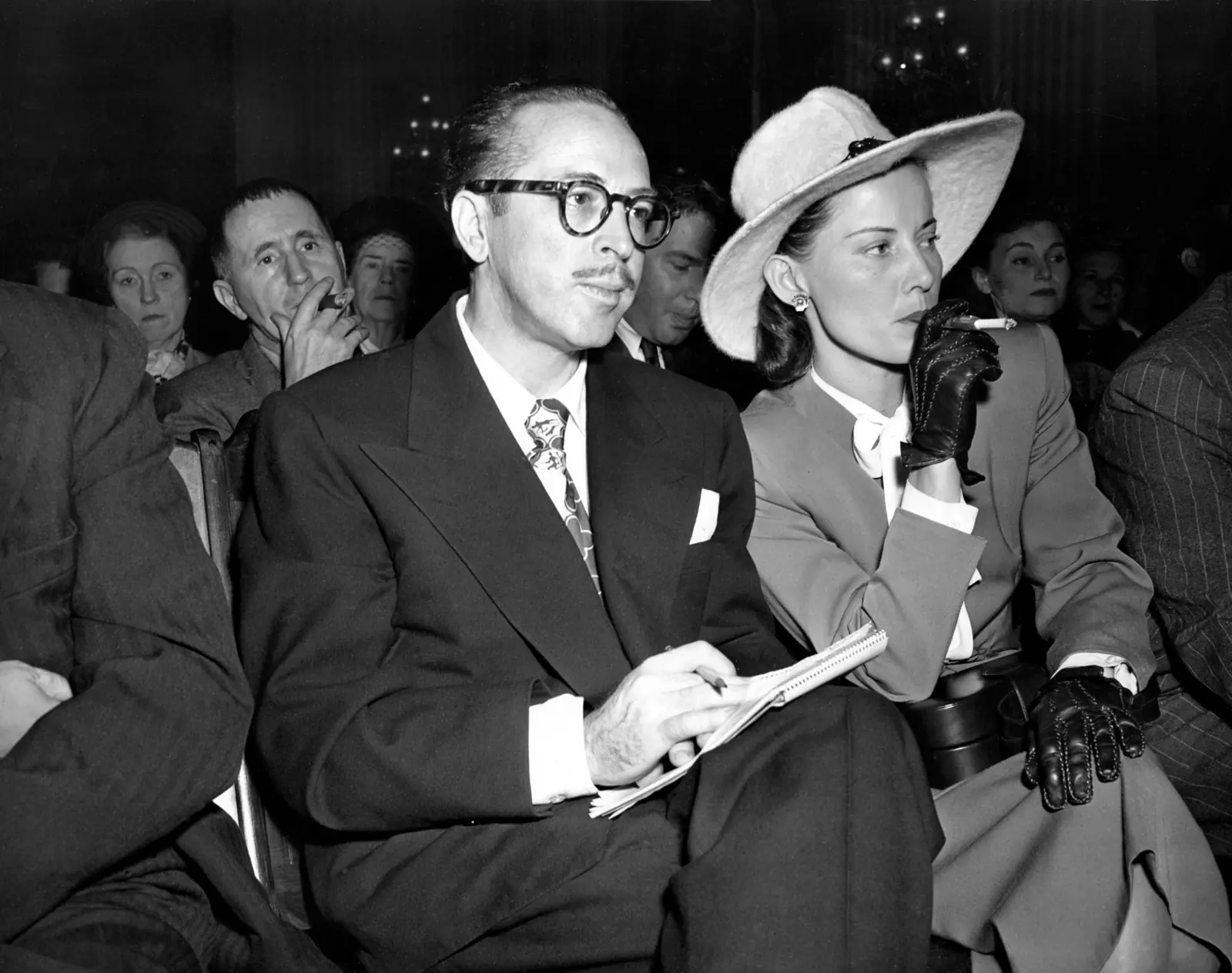
Plate I · The bathtub
Dalton Trumbo
Plate II · The garden shed
Roald Dahl
Plate III · Index cards
Vladimir Nabokov
Plate IV · Telephone and whisky
Raymond Chandler
Plate V · The handwritten notebook
Quentin Tarantino
Plate VI · The mirror
Aaron Sorkin
Plate VII · The bed
Truman Capote
Plate VIII · The supermarket café
Diablo Cody
Every screenwriter has a ritual, whether they know it or not: the same coffee, the same hour, the same chair, the same music. A few writers in film history pushed theirs so far that how they wrote became as famous as what they wrote.
This issue is about those legends. Some will make you smile. A few might worry you. Under every one of them sits the same question: how does a writer face the blank page?
OnePlace: the bathtub, the shed, the supermarket
Dalton Trumbo and the bathtub
Dalton Trumbo was one of the best-paid screenwriters in Hollywood when the blacklist caught him. For years he wrote behind fronts and pseudonyms, and he won two Oscars that way. But the picture most film lovers keep of him is a different one: Trumbo in the bathtub, a tray in front of him, pages everywhere.
His son says the habit started around 1945, for a fairly dull reason. The house had termites and had to be fumigated. Trumbo had a deadline coming, so he shut himself in the bathroom, which had its own ventilation, and kept working. Then he never really left. He moved his filing cabinets in and spent hours fussing over the water temperature. By some accounts he even held story meetings in there with directors and producers, the guests in comfortable chairs and Trumbo holding court from the tub.
Roald Dahl and the garden shed
Roald Dahl is famous for his children's books, but he also wrote two well-known screenplays: the Bond film You Only Live Twice and Chitty Chitty Bang Bang. He wrote in a small shed at the bottom of his garden, with the curtains nearly always drawn. Most of the room was taken up by his mother's old green armchair, which he had cut a hole into to ease the pain in his back. He propped his legs on an old suitcase and kept them warm under a sleeping bag. He wrote on yellow legal pads, always with the same brand of pencil. On the desk sat a silver ball made from years of saved chocolate wrappers, and a piece of his own hip bone that surgeons had taken out.
The shed is so famous that Wes Anderson rebuilt it almost to the inch for his Dahl adaptations. A writer's ritual became a director's set.
Diablo Cody and the supermarket café
Some rituals aren't romantic, just practical. Diablo Cody wrote most of Juno at the coffee counter of a Target in the town of Crystal, Minnesota, with shopping carts rolling past and sale announcements coming over the speakers. The script won an Oscar in 2008. Sometimes inspiration doesn't need a shed. It only needs you out of the house.
Kurosawa and the inn
The story goes that Akira Kurosawa and his co-writers would check into an inn to write their big scripts and not come out for weeks. No phone, no visitors, just a table and paper. It is the strictest form of the co-writing we covered in our piece on writing with a partner: living under one roof until the story is finished.
Some writers need a shed to be inspired. Others just need an excuse to get out of the house.
TwoThe body: the horizontal writer, the shower and the mirror
Truman Capote, the novelist who also wrote for the screen, called himself “a completely horizontal author” in a 1957 interview. He couldn't think, he said, unless he was lying down, in bed or stretched out on a couch, with coffee or something stronger in his hand. His screen credits include Beat the Devil and The Innocents.
Aaron Sorkin does the opposite. He writes on his feet and performs the dialogue out loud. When he gets stuck, he says, he takes a shower, sometimes several in a day, because a shower is his way of starting over. Woody Allen uses the same trick, as we noted in our Writer File on him. Sorkin's most famous ritual story, though, is an accident. Writing a scene for The Newsroom, he was alone in his bathroom, acting out a character who lunges forward while two people hold him back. Nobody was there to hold Sorkin. He went face first into the mirror and broke his nose.
Vladimir Nabokov, the novelist who also wrote the screenplay for Lolita and got an Oscar nomination for it, said he started each day standing at an old lectern in his study. As the day wore on he sat down, and by the end of it he was lying down. Every day, his body made the whole trip from Sorkin to Capote.
ThreeTools: cards, pencils, typewriters
Nabokov's real obsession was his tools. He wrote on lined index cards and was fussy about the kind. His pencils had to be sharp, not too hard, with an eraser on the end. The cards gave him a desk he could carry: he wrote in the car while his wife drove them out to hunt butterflies. He could shuffle them however he liked and put the scenes in a new order. Call it the handmade ancestor of the index card board you now find in screenwriting software.
Quentin Tarantino writes his first drafts by hand. As he describes it, that draft is a raw dump of everything that comes into his head, with nothing censored. Only later does he move it to a typewriter or a computer and start working it over. Seeing the ideas on paper, in his own handwriting, makes it easier for him to decide which ones stay.
This list also has room for the Olympia typewriter Woody Allen bought when he was 16, and for the scissors he used to cut scenes apart before stapling them back together. Dahl's yellow pads belong here too. What these writers share is that the tool is less an instrument than a threshold. The moment they pick up that pencil or set that card down in front of them, they are in writing mode.
FourCrisis: whisky, limousines and three and a half days
Some rituals aren't habits at all. They are born in a crisis, and the most extreme case is Raymond Chandler and The Blue Dahlia (1946).
Chandler hit a wall on the ending. The Navy had objected to a serviceman turning out to be the killer, and the studio wanted a new ending. Chandler wanted out. The producer, John Houseman, persuaded him to wait a day. The next day Chandler came back with an offer. He could finish the script, but only at home, and only if he could start drinking again. And he had conditions: chauffeured limousines outside his house day and night, six secretaries working in shifts, direct phone lines to the studio and to Houseman's office. With a doctor giving him glucose shots, he said, he could work for weeks without solid food. Houseman said yes, and Chandler finished the script. No screenwriter should copy this ritual. But it shows exactly what a deadline can drive a writer to.
Some crisis stories are healthier and just as intense. Sylvester Stallone supposedly wrote the first draft of Rocky in about three and a half days, after watching a boxing match. John Hughes is said to have written The Breakfast Club in a few days. Stories like these tend to grow in the telling. What they have in common is a writer so gripped by an idea that he doesn't need a ritual at all.
Then there is the master who turns the whole thing upside down. Hayao Miyazaki starts most of his films without a finished script. He finds the story in storyboards, drawing it scene by scene, and sometimes doesn't know how the film ends until it is already in production. For him the script is the destination, not the starting point.
Sometimes a ritual isn't there to summon inspiration. It's there to shut out everything else.
FiveWhat are these oddities for?
It's easy to read these stories and file them under eccentric habits. Look closer, though, and they all turn out to do the same three jobs.
First, a ritual is a door. Climbing into the tub, closing the shed door, opening the notebook: each one tells the brain “now we write.” It puts the hardest part of writing, the first minute, on autopilot.
Second, a ritual keeps the world out. Trumbo's tub, Dahl's drawn curtains and Kurosawa's inn all do the same thing. The phones, the visitors, the chores and the writer's own worries stay on the other side of the door.
Third, a ritual gets the body involved. Sorkin acting out his scenes, Nabokov writing standing up, Allen stepping into the shower. Part of being stuck lives in the body, not the mind, and moving the body can sometimes shake a scene loose.
SixBuild your own ritual
- Tip
Don't borrow a famous ritual. Find your own.
Trumbo's tub worked for him because it grew out of his own story. Yours should grow out of your life.
- Tip
Pick a starting signal.
A particular coffee, a particular piece of music, a particular pen. Start every writing session with the same one.
- Tip
Keep your writing spot separate from work.
If you can, don't write at the desk where you answer email. If you can't avoid it, at least change how the desk is laid out.
- Tip
When you're stuck, move.
A shower, a walk, playing the scene out on your feet. Just keep clear of Sorkin's mirror.
- Tip
Don't turn a crisis into a ritual.
Chandler's limousines make a good story and a bad method. Find a way to handle deadline pressure without hurting yourself.
- Tip
Run the ritual. Don't let it run you.
Once you hear yourself say “I can't write without the right pencil,” the ritual has stopped being a door and turned into a wall. Break it every now and then.
FinallyWhere's your bathtub?
No ritual wrote these scripts. Talent did, along with discipline and an obsessive curiosity. The ritual just made sure the talent came in through the same door every day.
Your door might be a kitchen table instead of a bathtub. It might be a cup of coffee at five in the morning, or a supermarket café. Where it is doesn't matter. What matters is that you walk through it every day.
The plates are illustrations drawn for Scriptopus Mag. Instead of photographs of the writers, they show the places where they wrote and the tools they wrote with.