Writers’ lives
EXT. CINEMA - NIGHT - EMPTY AUDITORIUM
The upside of failure
Classics that bombed, scripts everyone passed on, a writer handed the best and the worst screenplay awards on the same weekend, and the people who climbed back from the bottom. What failure teaches screenwriters.
By the Scriptopus Mag desk · Edited by Ali2 Nov 202614 min read
| Year · writer | Film | Then → now | Note |
|---|---|---|---|
| 1994 · Frank Darabont | The Shawshank Redemption | Flopped → A classic today | Seven Oscar nominations, no wins. A year later, the most rented video of the year. |
| 1973 → 1987 · William Goldman | The Princess Bride | Fourteen years on the shelf → Cult classic | The rights sold, the project stalled, and the writer bought them back. |
| 1994 → 1999 · Charlie Kaufman | Being John Malkovich | Everyone passed → Oscar-nominated | Every executive who read it said no. Then it landed with the right reader. |
| 1998 · Brian Helgeland | The same weekend | Oscar + Razzie | Best for one script, worst for another. |
Screenwriters rarely tell each other their failure stories. The talk is all award speeches, record sales and box office numbers. Yet nearly every famous screenwriter's career has one somewhere: a script nobody wanted, a film that died on release, a silence that went on for years.
So we've gathered those stories here. Every one is true, and each was a turning point in its writer's career. Together they make one point: you can't judge a script, or a writer, by the early returns.
OneLost at the box office, won back by time
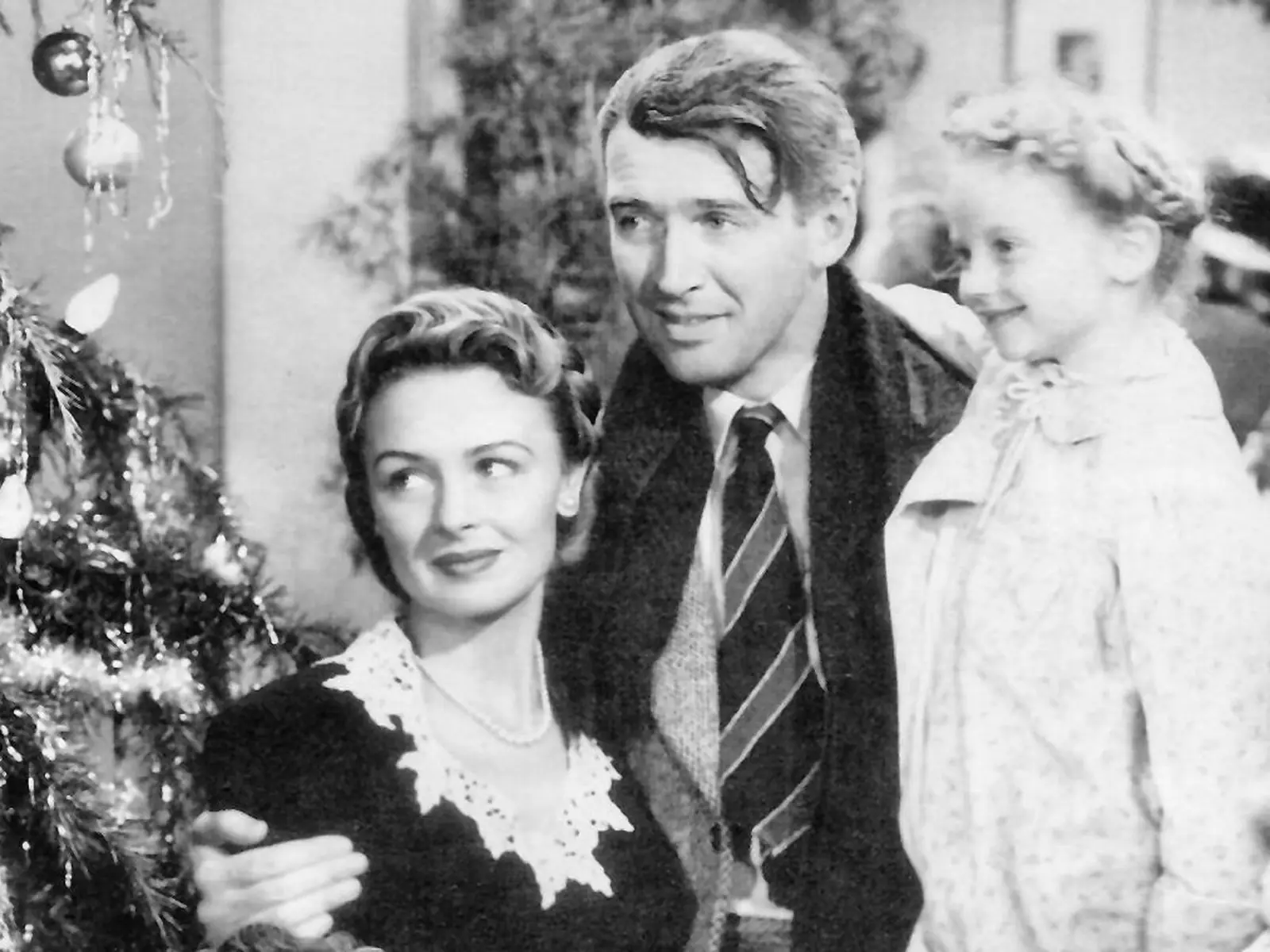
It's a Wonderful Life (1946)
Today it's one of the best-loved Christmas films anywhere. On release, though, it drew far smaller crowds than anyone expected and lost money for the company that made it. Years later, television started showing it every Christmas, new generations found it, and it became a classic. The story never changed. What changed was how audiences came to it.
Citizen Kane (1941)
The script Herman J. Mankiewicz and Orson Welles wrote together won the film's only Oscar. At the box office, though, the film lost money, thanks to a ferocious campaign against it by the newspaper baron William Randolph Hearst. Instead of taking off, Mankiewicz's career slowly fizzled. Today Citizen Kane tops lists of the most important films ever made. And Mankiewicz himself, decades after his death, became the hero of a film of his own: David Fincher's Mank, in 2020.
Ace in the Hole (1951)
Billy Wilder's savage satire about a reporter who milks a disaster for his own career went down badly with audiences and critics alike when it opened. The studio even changed its title. Today it ranks among the sharpest films ever made about the media. Wilder may simply have been too far ahead of his time.
The Thing (1982)
Bill Lancaster wrote it and John Carpenter directed it, and that same summer a much friendlier alien stole its thunder. It flopped, and the critics were brutal. Today it's one of the most respected classics in horror.
The Shawshank Redemption (1994)
Frank Darabont's Stephen King adaptation cost around 25 million dollars and earned less than that in its first run. It got seven Oscar nominations and won none. Even its hard-to-remember title made it tough to sell. But it found a second life in video stores, where it was the most rented film of 1995. Television showings over the following years did the rest, and today it turns up on list after list as the best-loved film of all time.
Every one of these films teaches the same lesson: the box office is a date, not a verdict. Opening weekend is a film's first date with its audience. It isn't the last.
Some films never find their audience in theaters. Years later, the audience finds them.
TwoScripts nobody wanted
Being John Malkovich
In 1994 Charlie Kaufman wrote a script nobody had asked for. A puppeteer finds a door on floor seven and a half of an office building, and it leads into the head of a famous actor. One after another, the executives at the production companies and studios that read it passed. Too weird, too risky, impossible to sell.
Eventually Kaufman sent the script to Francis Ford Coppola. Coppola handed it to his daughter Sofia's boyfriend at the time, a music video director named Spike Jonze. Jonze read it in 1996 and decided to direct it. The film came out in 1999 and earned three Oscar nominations, including Best Original Screenplay. The problem had never been the script. It was who was reading it. Once the right reader turned up, the very same pages went somewhere else entirely.
The Princess Bride
William Goldman published The Princess Bride as a novel in 1973. The film rights sold right away, Goldman wrote the script, a director signed on. Then the project stalled, so Goldman bought the rights back himself. Over the next years, names like François Truffaut, Norman Jewison and Robert Redford circled the project or were talked about for it. None of it came to anything.
It took fourteen years, and a director Goldman trusted, Rob Reiner, before the film got made. It opened in 1987 to good reviews and a so-so box office. Reiner later blamed the marketing: the film didn't fit any category, and the title made it sound like a fairy tale for kids. Like the others, it was discovered on videotape and became a cult favorite. Goldman's story has a very concrete lesson: if you can buy back the rights, the story isn't dead.
ThreeThe same weekend: the best and the worst
In the spring of 1998 Brian Helgeland had what may be the strangest weekend a screenwriter can live through. He won the Oscar for Best Adapted Screenplay for L.A. Confidential. That same weekend, another script of his, The Postman, won him the Razzie for Worst Screenplay.
It makes a good anecdote, but it also shows what a screenwriting career is really like. The same writer, in the same year, with the same skills, can turn out one script that becomes a legend and another that becomes a punchline. A screenwriter is never one project. A film doesn't define you. Your career does. And a career is a long tally of good results and bad ones.
Same pen, same year: one Oscar, one Razzie. The writer is neither. The writer is the sum of both.
FourBack from rock bottom
M. Night Shyamalan: betting the house
The Sixth Sense made Shyamalan one of the most talked-about writer-directors in the world. Then came a long slide. Critics tore The Happening apart. The Last Airbender cost 150 million dollars and was savaged. After Earth went the same way. In Hollywood, Shyamalan's name had started to work like a warning label.
His answer was to go small. He borrowed five million dollars against his house and, with his own money and no studio behind him, made a little horror film called The Visit. It came out in 2015 and took around 98 million dollars worldwide, nearly twenty times its budget. The next one, Split, made 278 million dollars on a budget of 9 million. Since then Shyamalan has kept making his films on small budgets he puts up himself. Sometimes shrinking is the only way to grow again.
Aaron Sorkin: one show canceled, one Oscar won
After the huge success of The West Wing, Sorkin was one of the most powerful writers in television. His next series, Studio 60 on the Sunset Strip, launched amid huge expectations and was canceled after one season. Critics found it smug and preachy.
A few years later, Sorkin won an Oscar for his screenplay of The Social Network. He never stopped writing in between. To him a cancellation was an intermission, not the end.
Shane Black: the quiet after the record sale
As we wrote in an earlier piece, Shane Black sold his script for The Long Kiss Goodnight in 1994 for a record price. The film underperformed, and every article about it hung that price around its neck. The next film from a Black script didn't arrive until nine years later, in 2005: Kiss Kiss Bang Bang, a much smaller film he directed himself. It did modest business, but critics loved it, and it relaunched his career. In the end, the writer who had chased records found his way back to his own voice.
Akira Kurosawa: the darkest hour
The hardest story here is Kurosawa's. Dodes'ka-den, made in 1970, failed commercially, and it came at a time when the Japanese film industry was in deep crisis. In 1971 Kurosawa fell into a severe depression and attempted suicide. He recovered slowly and started work on a Soviet co-production, Dersu Uzala, which won the Oscar for Best Foreign Language Film in 1976. After it came great films like Kagemusha and Ran.
His story is a reminder that failure can wound the person as well as the career. And that even the darkest hour doesn't have to be the last one. Asking for help, taking time off, starting over somewhere completely new: all of it is part of writing, and of living.
FiveWhat these stories add up to
- Observation
The box office is a date, not a verdict.
Shawshank, It's a Wonderful Life and The Thing found their audiences years later, not in theaters.
- Observation
A no says more about the reader than the script.
Everyone passed on Being John Malkovich, until the right person read it.
- Observation
Hold on to your rights.
Goldman bought his rights back and waited fourteen years. He got to hand his story to the right people.
- Observation
You are not any one project.
Helgeland won best screenplay and worst screenplay on the same weekend.
- Observation
Sometimes shrinking is growing.
Shyamalan and Black came back by trading big budgets for small, personal projects.
- Observation
Time off is part of writing too.
Several years passed between Sorkin's canceled show and his Oscar. Years passed between Kurosawa's darkest hour and his greatest films, too.
- Observation
Failure is quiet. So is success.
None of these writers got applause right after a failure. They just kept writing, quietly.
FinallyThe next page
Some of you reading this have a script in a drawer that nobody wanted. Some have a film on your résumé that nobody saw. And some of you haven't been able to write a word in a long time.
Every writer on this page has been there. Kaufman's script was collecting rejections, Goldman's novel was gathering dust on a shelf, Shyamalan's name had turned into a warning label. None of them knew back then how their story would end. You don't know either. That might be the best news of all.