Business
INT. VIDEO STORE - NIGHT
Homage or heist?
Every story has a parent. So where does borrowing end and stealing begin? A practical attempt to draw the line, with the philosophy and the case law both on the table.
By the Scriptopus Mag desk · Edited by Ali and Umut15 Oct 202614 min read
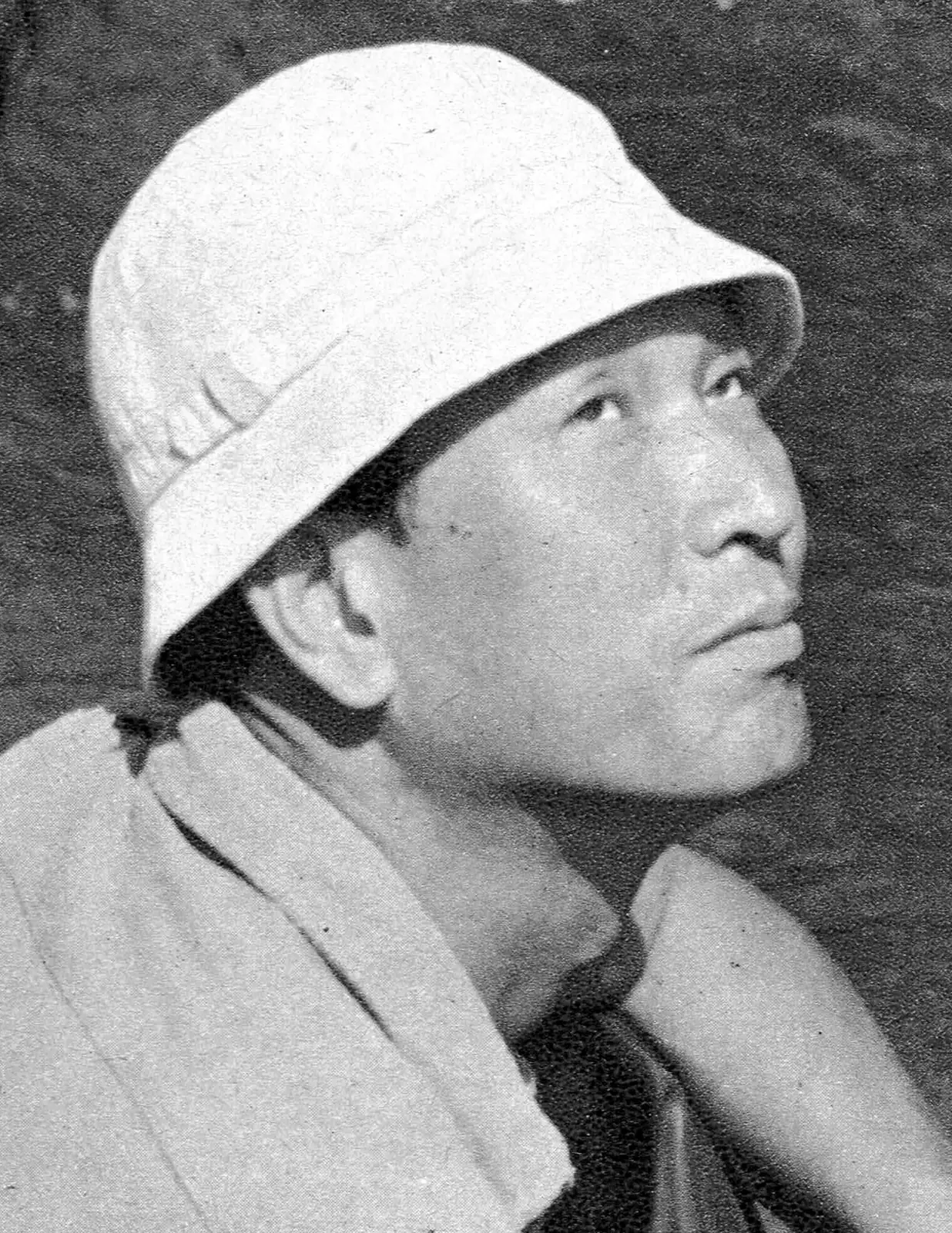
- Director
- Akira Kurosawa
- Hero
- A drifting samurai without so much as a name
- Setting
- A town carved up by two gangs
- Plan
- Play the two sides off against each other
Hammett's crime novel Red Harvest is often cited as a source.
- Director
- Sergio Leone
- Hero
- A drifting gunslinger without so much as a name
- Setting
- A border town carved up by two families
- Plan
- Play the two sides off against each other
Toho sued. The settlement gave Kurosawa's side a cut of the worldwide gross, and the film didn't reach US theaters until 1967.
- Archetype
- Mentor, hero, shadow. Humanity's common property. Everyone's
- Structure
- Three acts, the hero's journey, the time loop. Everyone's
- Premise
- “A stranger plays two gangs off against each other.” Debatable
- Sequence of scenes
- The same characters hitting the same turns in the same order. Dangerous
- Expression
- Dialogue, framing, a scene nobody wrote before. Someone else's work. Theft
Sooner or later it happens to every screenwriter. You've spent months on a story, and then a film opens that looks a lot like it. Or worse: two years after you pitched an idea to a producer, there it is on screen with someone else's name on it. The first question is always the same. Coincidence, inspiration, or plain theft?
This piece takes the question seriously. It won't hide behind the comfortable line that “every story has already been told, so nobody steals from anybody,” and it won't cry plagiarism at every resemblance either. It looks at real cases and tries to find where the line actually runs.
OneEvery story has a parent
Storytelling was built on borrowing from the start. Shakespeare took Romeo and Juliet almost event for event from a long poem Arthur Brooke had written some thirty years earlier. He didn't hide it, because in his day there was nothing to hide. The story wasn't what he brought. The language and the characters were.
Screenwriting craft turned that shared inheritance into systems. In 1895 Georges Polti sorted every dramatic situation into thirty-six types. In 1949 Joseph Campbell described the hero's journey that turns up in myths all over the world. In the 1980s Christopher Vogler adapted Campbell for screenwriters in a memo that made the rounds at Disney, and today it's taught in nearly every screenwriting workshop. In 2004 Christopher Booker argued that every story boils down to seven basic plots.
All of these books make the same point: archetypes and structures belong to nobody. A mentor's death, the hero coming home, a love that can never be. Using them isn't stealing. It's speaking a common language. The trouble starts when you stop speaking the language and start copying out paragraphs someone else wrote in it.
TwoKurosawa three ways: licensed, sued, inspired
Akira Kurosawa's films give us something rare: three different kinds of borrowing, all from the same filmmaker.
Seven Samurai (1954) came back in 1960 as a western, The Magnificent Seven. It was an official remake, and the rights were paid for. Nobody stole anything. One side sold and the other bought.
Yojimbo (1961) became Sergio Leone's A Fistful of Dollars (1964), and nobody asked first. Look at the two cards above: the films share almost the same skeleton. Toho, the studio behind Kurosawa's film, sued. By most accounts the settlement gave Kurosawa's side around fifteen percent of the film's worldwide gross, plus damages. Some sources say Kurosawa made more from the settlement than from Yojimbo itself. The suit also kept Leone's film out of American theaters for years.
The Hidden Fortress (1958) fed into George Lucas's Star Wars (1977), and Lucas says so openly. Kurosawa told his story through the eyes of two nobodies, a pair of bickering peasants. Lucas told his through two droids. There was no license and no lawsuit, because Lucas hadn't taken a scene. He had taken a point of view and moved it into a completely different world.
The irony is that Yojimbo itself is often said to owe a debt to Dashiell Hammett's crime novels. The chain never breaks. What matters is what changes at each link.
One director, three films, three outcomes: one was bought, one ended in court, one inspired something new. The difference was never the story. It was the kind of thing that got taken.
ThreeIdeas aren't protected, expression is, and a contract covers it all
Copyright law in many countries works from the same basic rule: an idea isn't protected, but the original expression of an idea is. “A rich prince goes undercover in a poor neighborhood to find a wife” is an idea. The scenes, dialogue and characters someone builds out of it are expression. This isn't legal advice, but it's a rule every screenwriter should know.
Which is exactly why one of the most famous idea cases in film history was won on contract, not copyright. In 1982 the journalist Art Buchwald wrote a treatment about an African king who comes to America. Paramount bought the rights, then shelved it. In 1988 Coming to America opened, starring Eddie Murphy. Buchwald sued, and in 1990 the court ruled that the film was based on his treatment and that Paramount had broken its contract. The even more famous part was the money. The film had taken hundreds of millions of dollars at the box office, yet by the studio's accounting it had never turned a net profit. The court found that net profit formula unfair as well. The case ended in a settlement worth hundreds of thousands of dollars.
For screenwriters the lesson is a practical one: the paper trail won the case, not the brilliance of the idea. Buchwald had a contract, a dated treatment and a record of letters back and forth. When you pitch to a producer, leave that trail.
Four“I steal from every single movie”: Tarantino steals out loud
Quentin Tarantino may be the most candid borrower the movies have ever had. In a 1994 magazine interview he reportedly said, “I steal from every single movie ever made.” People spent years comparing Reservoir Dogs (1992) with Ringo Lam's Hong Kong film City on Fire (1987): a robbery, an undercover cop, a showdown in a warehouse.
His defenders and his critics describe the same thing and draw different conclusions. Whatever he takes, he runs through his own voice, his own dialogue, his own games with time. He may lift the bones of a scene, but the film that comes out is a different film. His critics' complaint is that all this reworking hides the labor of the original from view.
In 1920 T. S. Eliot drew a famous distinction: “Immature poets imitate; mature poets steal.” The rest of the sentence is the part that matters. Good poets, he went on, make what they take “into something better, or at least something different.” The line keeps getting credited to Picasso, wrongly. Whoever said it, the test is clear: if you made what you took into something of your own, it's inspiration. If you used it as it was, it's theft.
FiveYeşilçam's borrowed world
While we're on the subject, we owe the cinema closest to home, Turkey's, an honest look too. The Man Who Saves the World (1982) spliced space scenes from Star Wars into its own film without asking, and went on to cult fame around the world as “Turkish Star Wars.” We remember it fondly today. Legally and ethically, though, it wasn't inspiration. It was theft, and nobody bothered to hide it.
Metin Erksan's Şeytan (1974) was a homegrown version of William Friedkin's The Exorcist (1973), almost scene for scene. Between the market of the day, weak copyright enforcement and the pressure to shoot fast, films like that were routine.
Things look very different now. Turkish television buys foreign formats legitimately and adapts them, and it sells its own formats to the rest of the world. In other words, we've moved to the first of Kurosawa's three ways: the license. Call it growing up.
SixTwin films: theft, or something in the air?
Every so often two films with nearly the same idea open in the same year. In 1998 Armageddon and Deep Impact both sent a rock hurtling toward Earth. That same year brought two animated films about ants, Antz and A Bug's Life. In 2006 The Prestige and The Illusionist were both about nineteenth-century magicians.
Usually it's something in the air: the same news stories, the same books, the same things new technology has just made possible. But it isn't always innocent. Antz and A Bug's Life left behind a grudge the industry talked about for years. Pixar's people believed that DreamWorks' bosses, who knew about the Pixar project, had rushed Antz out ahead of it. DreamWorks said it had had the idea first. Two people can hit on the same idea at the same time. When one of them already knew about the other's idea, that's a different question.
SevenWhere's the line? A six-question test
These are the questions we ask at the desk to work out where a piece of borrowing lands.
- Question
What did I take?
An archetype, a structure, a premise, a sequence of scenes, a sentence? The further along the scale you go, the bigger the risk.
- Question
Could I name my source out loud?
If you'd happily tell an interviewer “I was inspired by this film,” it was most likely inspiration. The urge to hide your source is a warning sign.
- Question
Without the source, would my story still stand?
If the heart of your story is someone else's scene, it isn't your story.
- Question
What did I add?
A new point of view, a whole different world, your own characters, your own voice. Whatever you didn't change isn't yours.
- Question
Side by side, would an ordinary person see it at once?
If someone with no expertise reads the two side by side and says they're the same thing, we're not talking about inspiration anymore. We're talking about a copy.
- Question
Would I be embarrassed to show it to the original's author?
This may be the most honest test of all. Picture the writer who inspired you reading your script. Are they proud, or are they calling their lawyer?
Protecting yourself
Fear of being stolen from can freeze a screenwriter just as badly. Instead of worrying, take a few simple precautions. Keep dated copies of your drafts. Register your important projects; in Turkey, the Ministry of Culture and Tourism runs a registration system for exactly this. After any meeting where you pitch an idea, send a short email summing it up. If you're sending material to a big production company, ask for a nondisclosure agreement. None of this is legal advice. It's simply the biggest lesson of Buchwald's case: leave a trail.
FinallyIt's the work, not the idea
No screenwriter starts from nothing. Everything we read, watch and live through finds its way onto our pages sooner or later. That isn't a crime. That's what literature and cinema are.
Maybe this is where the line runs. If what you took was an idea, chances are someone else had already thought of it. But if what you took was someone's work, the scenes, characters and sentences they spent months building, it isn't inspiration anymore. At that point you're not borrowing. You're taking someone's time.