Craft
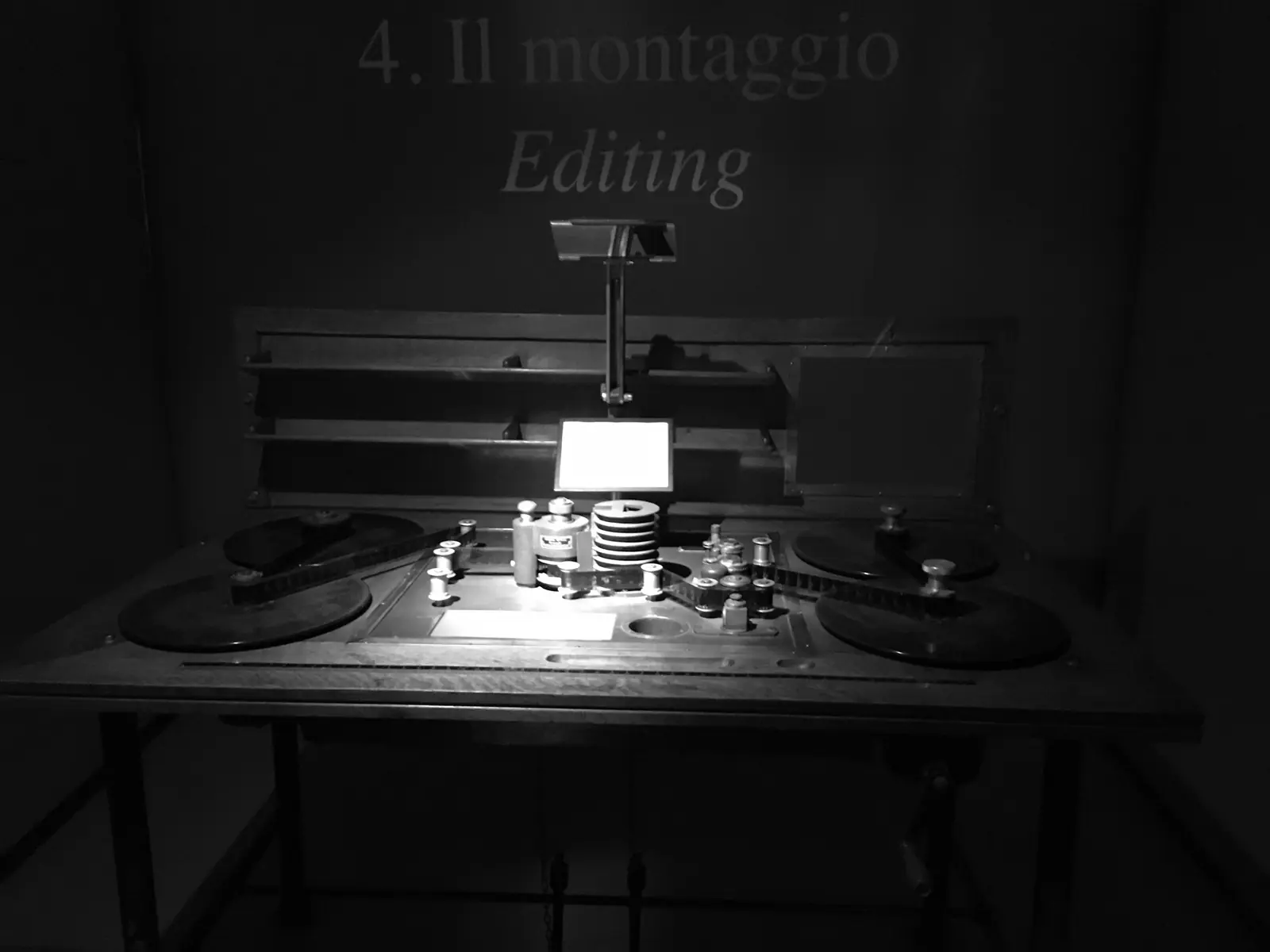
INT. EDITING ROOM - BEFORE DAWN
Kill your darlings
Cutting a script is harder than writing it. From cheating the font to fights in the editing room: what it costs to cut the scene you love, and the bigger price of keeping it.
By the Scriptopus Mag desk · Edited by Umut12 Oct 202614 min read
Page 47.
| Setting | Standard | Cheat |
|---|---|---|
| Typeface | Courier 12 point | 11.5 point |
| Left margin | 1.5 inches | 1.3 inches |
| Before a scene heading | 2 blank lines | 1 blank line |
| Line spacing | Exact | A little tight |
| Page count | 128 | 117 |
| The film's real running time | Unchanged | Unchanged |
The shooting schedule measures scenes in eighths of a page. A cheated page makes the schedule lie too.
Sooner or later, this file turns up on every screenwriter's computer: script_v7_SHORT.pdf. Not a single scene has been cut from it. The font is a notch smaller, the margins are a few millimeters narrower, and one of the blank lines before each scene heading has quietly gone. Ten pages lighter, nothing lost. Or so it looks.
This desk has made plenty of these files. You love all of it, you don't want to cut anything, and it still has to get shorter. Somewhere along the way you realize that shortening a script is much harder than writing it.
OneA page is a minute, and the lie behind it
The industry has an old rule of thumb: a page of script is about a minute of film. That's why producers and streamers look at the page count. A 120-page feature is normal. A 140-page one is a warning sign. At 160 pages, the file often comes back unread.
Cheating the font is the oldest way around that rule, and readers know it on sight. The page looks crowded, it tires the eye, the white space shrinks. Worse, the cheat fools the whole production along with the reader. Production builds the shooting schedule in eighths of a page, so a cheated page tells the schedule there is less work than there really is. The time runs out on set, and the cutting gets left to the editing room. The font cheat only puts off the cut, or hands it to someone else.
There are exceptions, and they prove the rule. Aaron Sorkin's script for The Social Network (2010) ran about 178 pages, and the studio wanted thirty of them gone. David Fincher had Sorkin read the whole thing aloud instead, and timed every scene with a stopwatch. The actors were told to play the dialogue very fast, and the film came in at around two hours. Pace decided it, not page count. But the trick has a catch: you need a director like Fincher and dialogue like Sorkin's. For most of us, 178 pages is still 178 minutes.
TwoWhy is cutting so hard?
When you write a scene, you know why you're writing it. When you cut it, you find out why you're attached to it. Those aren't the same thing.
Some scenes are there for you, not the story. A memory of your father, something you once said or never managed to say, a reference only you will catch. Nobody else will get it, but you want it in. That's a very human feeling, and sometimes it's the right one. But the scene still charges the story for it, and the price is pace.
Writers hear “kill your darlings” all the time, and it usually gets pinned on Faulkner or Stephen King. The first person to put the idea plainly was actually the English writer Arthur Quiller-Couch, lecturing his writing students at Cambridge in 1914. His point was that the passage you like best, the one where you can feel yourself showing off, is the first one that should go. A century on, the advice still holds, and it still hurts just as much.
When you write, you know which story you want to tell. When you cut, you learn which story you're telling.
ThreeThe editing room is the last writer
If the screenwriter doesn't cut, somebody else will, and their scissors often go places the script never saw coming.
The Big Chill (1983) follows a group of old friends who come together for a friend's funeral. The friend who died, Alex, was played by a young Kevin Costner. Flashbacks were shot, and every one of them was cut. Today you see almost nothing of Costner in the film but a body being dressed for the coffin. Lawrence Kasdan, the story goes, made it up to him with a big part in his next film, Silverado.
The Thin Red Line (1998) goes further. In Terrence Malick's edit, Adrien Brody's character, meant to be a lead, shrank to a bit part with a handful of lines. Brody says he found out at the premiere, after a long, hard shoot, and was mortified. Mickey Rourke's scenes went entirely. Malick found his film all over again in the editing room. It is one of the starkest examples of a script being rewritten from scratch in the edit.
Star Wars (1977) made a similar call. Luke's early scenes on Tatooine with his friend Biggs were shot, then dropped so the film could open faster, on the space battle and the droids. We met Luke a few minutes later, and the film got its pace in exchange.
FourWho holds the scissors? Cinema's great fights over the cut
Sometimes cutting a film isn't a creative decision at all. It's a power struggle. Art doesn't always win those. Then again, the studio doesn't always lose.
Brazil (1985)
Terry Gilliam went to war with Universal's boss, Sid Sheinberg, over the film's length and its ending. The studio put together a shorter version with a happier ending. Gilliam bought a full-page ad in the trade paper Variety asking Sheinberg, in public, when he planned to release the film. The Los Angeles film critics gave it their best picture award before it had even opened. In the end the film came out in a version very close to Gilliam's cut. This time the director who fought the cut won.
Heaven's Gate (1980)
Michael Cimino's first cut reportedly ran past five hours. The film opened at about three and a half hours, and it was a disaster. It was pulled from theaters and cut to under two and a half hours, but by then it was too late. The huge box-office flop hurried along the sale of the studio behind it, United Artists. This time the director who fought the cut lost, and took a studio down with him.
Once Upon a Time in America (1984)
Sergio Leone's film ran nearly four hours and jumped back and forth in time. For American audiences it was cut to just over two hours, with its events put in chronological order. That version flopped badly. The long version is now considered Leone's masterpiece. Here the scissors cut through the film's structure, and its meaning went with it.
Put the three stories together and the lesson is uncomfortable: whether a cut is right depends on what gets cut, not on the running time. Heaven's Gate didn't sink because it was long. It sank because its story couldn't carry the length. Once Upon a Time in America didn't collapse because it was shortened. It collapsed because its structure was broken.
FiveHow to cut
These are the methods that have piled up on our desk over the years. None of them is magic, and every one of them stings a little.
Get in late, get out early
Opening the door, hanging up the coat, the how-are-yous. As the page at the top of this piece shows, most scenes start before they start and end after they're over. Cut the walks through doors, the phone pickups, the goodbyes. Come into the scene in the middle of the conflict.
Cut the second scene that tells us the same thing
In early drafts, information usually arrives twice: once shown, once told. Keep whichever is stronger.
Merge characters
Does your hero have two close friends? One is often enough. Folding two characters' jobs into one saves pages without cutting a scene, and the character who survives gets richer.
The darling test
Ask yourself what breaks in the story if this scene goes. If the answer is “nothing, but I'll be sad,” cut it. If it's “nothing breaks, but we'd know the character less,” move that trait into another scene and cut it anyway.
Keep a graveyard file
Put every scene you cut into a separate file. Knowing it isn't gone makes cutting much easier. Think of Woody Allen's drawer of ideas: some scenes sit there for years, then come back to life in another story.
Read it aloud, with a stopwatch
Fincher's method works for anyone. Read the script out loud and time every scene. Dialogue that looks quick on paper stretches out when it's spoken, and action that looks long is over in seconds.
SixNobody else will get it, but it stays: your one personal scene
Now let's be honest with ourselves for a minute. Every script has a scene that matters to you and does very little for the story. Banning those outright would be a mistake. Some of the best-loved moments in film are exactly the personal bits a writer or director refused to give up.
So here's our suggestion. Allow yourself one scene like that per script. Just one, and keep it knowingly. Keep it short, and put it somewhere it won't stall the story. When the producer or director comes to cut it, have the strength to defend it, because if you fight for every scene, you can't fight for any of them. Pick your hill.
Turkish television has the reverse problem. Episodes run so long that writers are sometimes forced to stretch instead of cut. It takes the same muscle. If you can't tell what carries the story from what only fills time, you can't cut well, and you can't stretch well either.
SevenRules from the desk
- Rule
The font cheat is the last resort, not the first.
Cut scenes first, then touch the page layout. Cheating is acceptable only for the last two or three pages.
- Rule
Cut the entrances and exits first.
Doors, phones, goodbyes. This is where you get the most pages for the least pain.
- Rule
Find the repeats.
When two scenes deliver the same information, the same feeling or the same conflict, cut one.
- Rule
Read the scene aloud before you cut it.
Paper lies. A voice and a stopwatch don't.
- Rule
Keep a graveyard file.
Don't delete what you cut. Save it. Knowing it won't be lost steadies your hand.
- Rule
You get one personal scene.
Choose it on purpose, keep it short and defend it. Give the rest to the story.
- Rule
If you don't cut, someone else will.
The editing room is the script's last writer. Keeping the scissors in your own hands is the surest way to protect your story.
FinallyThe pages you cut make the rest stronger
A shorter script doesn't say less than the long one did. It says fewer things, and says them harder. Every scene you cut makes room for the ones that stay. The audience will never know what you cut, but they will feel why the rest works so well.
Open script_v7_SHORT.pdf. Put the font back to twelve point and the margins back where they were. Then pick up the scissors.