Craft
INT. MOVIE THEATER - NIGHT
The math of a twist
The oldest mind game a writer plays with an audience: what you hide, what you sacrifice to hide it, and why the film has to turn into a different film the second time you watch it.
By the Scriptopus Mag desk · Edited by Ali and Umut6 Oct 202613 min read
Twist = assumption × consistency × cost
- Assumption
- A false belief the audience builds on its own. All you do is keep it fed. The stronger it is, the louder the crash.
- Consistency
- Every scene still holds up when you look back knowing what you know now. If this is zero, so is the answer.
- Cost
- What the twist costs a character, a relationship, the audience's heart. A twist that changes the facts surprises people. A twist that changes how they feel stays with them.
A child psychologist tries to help a frightened boy who says he sees dead people. All the while, his own marriage is quietly coming apart.
The audience thinks it's watching a story about therapy.
A dead man talks to the one person who can see him: a little boy. His wife never answers him, because she can't hear him.
Same scenes, same frames. A different film.
Every screenwriter wants that moment at least once. The house lights are still down, the last scene is on the screen, and two hundred people hold their breath together. Then somebody in the dark says it, not to anyone in particular, just to themselves: “No way.”
That's the payoff for a good twist. The price of a bad one is just as steep: the same two hundred people walk out feeling conned. What separates the two is usually not the twist itself. It's the ninety minutes that come before it.
This piece is about those ninety minutes: how a twist gets built, what it makes you give up, and why people are still talking about some twists decades later.
OneA twist isn't a fact. It's an assumption caving in
People often make the mistake of treating a twist as a secret. A secret is information the writer is holding. A twist happens inside the audience's head. It's an assumption the audience builds for itself while you quietly keep it fed, and the twist is the moment that assumption caves in.
The Usual Suspects (1995) is the textbook case. Christopher McQuarrie's script sets up Verbal Kint as a beaten-down, cowardly nobody. We never suspect Verbal, because the film has taught us to feel sorry for him. When we finally look at the bulletin board in the interrogation room and the underside of the cup on the desk, what we learn isn't new information. It's the collapse of a judgment we spent two hours building with our own hands.
In his famous interviews with Truffaut, Hitchcock explains the difference between surprise and suspense with a bomb under a table. If the bomb goes off out of nowhere, the audience jumps for a few seconds. If they know it's there, they squirm for minutes while the characters make small talk. A twist is an odd cross between the two. The audience doesn't know there's a bomb, but it has been planted where they can hear it ticking the whole time. They just took the sound for something else.
You don't write the twist. The audience does. All you do is steer their pen the wrong way.
TwoFair play: the first time, a clue is set dressing. The second time, it's a confession
Every twist that works is a fair game played against the audience. The clues are right there in plain sight. They just mean something else the first time through.
That's why The Sixth Sense (1999) still gets screened in screenwriting classes. After the attack in the opening scene, Malcolm Crowe never has a real conversation with anyone but the boy. The dinner with his wife plays like a fight, yet she never answers him. The chill and the touches of red that tell us the dead are near keep coming back, scene after scene. The first time, it's all atmosphere. The second time, every one of them is a confession.
Fight Club (1999) plays the same game with the images themselves. Before he ever meets the narrator, Tyler Durden flickers onto the screen several times, in frames so brief you'd barely catch them. The audience sees him without seeing him. When the twist comes, the film is telling the audience, “I told you so.” Those four words are the signature of a fair twist.
Our test at the desk is simple: on the second viewing every clue should be plain to see, and on the first, none of them should stand out. Hide a clue too well and the twist feels like a cheat. Make it too obvious and the audience solves it half an hour early and feels smarter than you. Both are disasters, but the second one happens more often.
ThreeThe cost of a twist: what are you giving up?
Nobody talks much about what you have to give up to build a twist. Keeping something hidden means you can't write the scenes about it.
The writer of The Sixth Sense couldn't give Malcolm and his wife a single real conversation. Their whole marriage had to play out in silences, looks and gestures that stop halfway. That sounds like a handicap, but the film's most moving scenes come straight out of it. Sometimes a twist demands a price, and sometimes the price turns out to be the film.
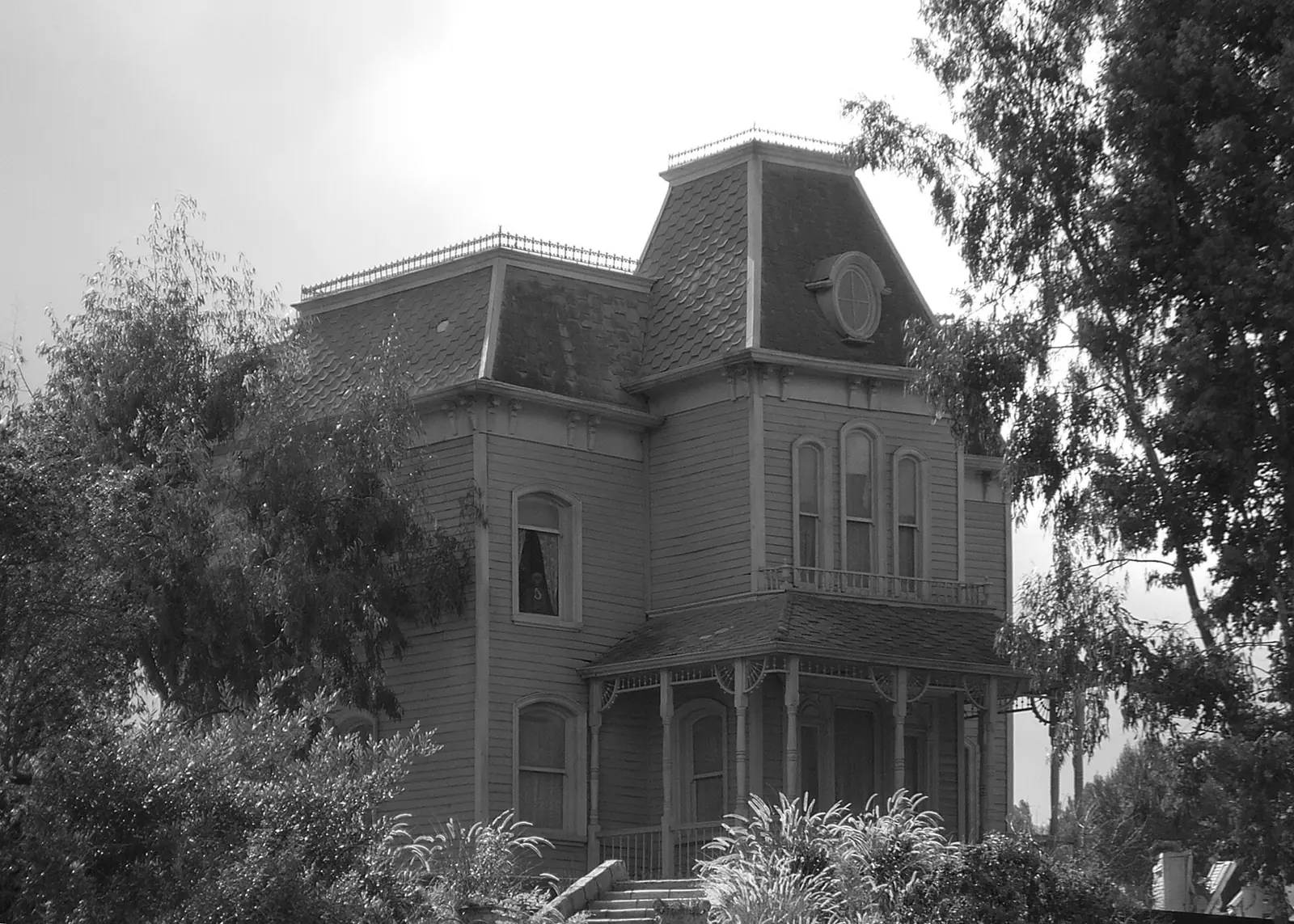
Psycho (1960) paid even more. Hitchcock killed off his star, Janet Leigh, before the story had even reached its midpoint. He threw away the audience's most basic assumption: that the star makes it to the end. And the cost didn't stop at the script. As the story goes, Hitchcock bought up as many copies of Robert Bloch's novel as he could find, held no advance screenings for critics, and built the advertising around one rule: nobody gets in once the film has started. Some twists reach past the script and reshape the whole marketing campaign.
Turkish television drama pays the opposite price. Almost every weekly episode ends on a “final scene,” which is to say a small twist. A team that has to pull this off every week ends up printing so many twists that each one is worth less. If every episode surprises you, none of them does. After a while, viewers start reading every secret that comes out as a promo for next week.
Every secret is a scene you can't write. Before you build the twist, make a list of those scenes.
FourTwists of fact and twists of feeling
Some twists change a fact: the killer is someone else, the hero is dead, the strange planet is Earth. The beach at the end of Planet of the Apes (1968) is one of the most iconic examples. One fact changes, and with it the whole film starts saying something different about the human race.
Other twists change a feeling rather than a fact. The “Red Wedding” episode in the third season of Game of Thrones (2013) is the one people talk about most. Readers of the books knew what was coming. Most viewers didn't. But the scene's power didn't come from the information. It came from the show repeating, far more painfully this time, the message it had sent in the first season with Ned Stark: nobody in this story is safe. Once again, the audience's idea of what kind of show this was came crashing down.
Parasite (2019) and Gone Girl (2014) put the twist somewhere else: in the middle. In Parasite, the basement door opens and the film turns from a comic social satire into suspense and then tragedy. In Gone Girl, the midpoint reveal moves the audience out of a mystery and into a character study. Here the twist isn't an ending. It's a shift of gears. The advantage of putting it there is that you have the rest of the film to pay for it.
FiveTwists in games: the assumption built into the medium
Game writers have a weapon film writers don't: the player. BioShock (2007) takes a voice that hands out missions with the same polite phrase all game long and turns it into the story's biggest secret. When the twist lands, the player realizes the character isn't the only one who has spent hours following orders without a second thought. So have they. The twist hits the hands holding the controller, not the character on the screen.
Star Wars: Knights of the Old Republic (2003) pulls something similar with identity. The character the player thinks they created turns out to be someone the story has known about all along. The player's own choices become part of the twist.
The lesson carries over to film and TV writers. The strongest twist plays on the medium's own assumption. At the movies, the audience trusts the camera. In a game, the player trusts the mission. In a series, the viewer trusts that the character will be back next week. So before you build a twist, ask yourself: in this medium, what does my audience take on faith?
SixTwists that don't work
The history of the twist is also full of flops, and they teach as much as the hits.
The undo twist
In the 1986 season finale of Dallas, Bobby Ewing, supposedly dead, turns up in the shower, and the next season's premiere explains that the whole season before it was a dream. It's one of the most mocked moments in television history. What collapsed here wasn't the audience's assumption. It was a year of the audience's life. Instead of holding up in hindsight, the season was simply wiped out. When consistency drops to zero, so does the whole equation.
The gimmick twist
The Village (2004) is one of M. Night Shyamalan's most debated films. Many critics saw the reveal at the end as a gimmick that drained, after the fact, the atmosphere and dread the film had spent so long building. Technically the twist was consistent. But instead of deepening what the audience felt, it shrank it.
The rushed twist
The final season of Game of Thrones (2019) left a large share of its viewers furious over Daenerys's turn. The signs had been there for years. The problem lay in the feeling, not the facts: the change happened over too few episodes, without enough groundwork for the heart. Viewers didn't say, “Where did that come from?” They said, “Why so fast?”
A bad twist tells the audience, “You were fooled.” A good one says, “Everything you saw was true. You just read it wrong.”
SevenA twist checklist
The questions we put on the table before we sit down to write one.
- Rule
The two-viewing test.
Does every scene still work for someone seeing the film a second time? If it doesn't, you've written a cheat, not a twist.
- Rule
Don't make a character stupid to protect the secret.
If the characters have no good reason to keep quiet about what they know, the audience will feel it. The secret should rest on something the character wants or fears.
- Rule
Give the twist an owner.
The best twists grow out of a character's choice or a character's secret. Twists that come out of the world itself tend to be weaker.
- Rule
The flashback montage is proof, not explanation.
If you're going to replay old scenes after the twist, do it to prove the audience right, not to teach them anything. Keep it short.
- Rule
Write at least one scene after the twist.
We want to see the character who now has to live with what they know. If the twist is the last frame, you're handing the emotional bill to the audience. Sometimes that's the right call, but make it on purpose.
- Rule
Who are you hiding it from?
Are you keeping the information from the audience or from the character? If the audience knows and the character doesn't, you're writing suspense, not a twist. Sometimes that's the better story.
- Rule
One big twist per story.
A second big twist cheapens the first. Once the audience has been fooled, they spend the rest of the running time hunting for the next trick.
FinallyA gift you can only open once
A twist is like a present: you only get to open it once. What sets a good one apart is that, once it's open, the wrapping is worth keeping too. The audience wants to go back and watch the same film again, this time to see a different one.
So don't start writing the twist from the last scene. Start from the first. The last scene is just where the door opens. The real work is in the rooms the audience walks through on the way to that door.