Craft
INT. CONFERENCE ROOM - DAY
Revisions!
Notes from the producer, the director, the star, the network, even the producer's spouse. Which ones are right, and which aren't? We won't hand down verdicts. Instead, here are the most famous revision stories in film history.
By the Scriptopus Mag desk · Edited by Ali17 Oct 202614 min read
| Color | Pages |
|---|---|
| White | The first shooting script |
| Blue | The producer's notes |
| Pink | The director's read |
| Yellow | The actor's suggestion |
| Green | The network's notes |
| Goldenrod | The night before the shoot |
The colors run in the standard order the industry uses for revised pages. Whose notes land on which color is our own guess.
| Who | What they say | What they mean |
|---|---|---|
| Producer | “The second act feels a little long.” | I got bored somewhere, but I can't tell you where. |
| Network | “Can we make the character more likable?” | I never figured out why I should care about this person. |
| Director | “This scene needs to be clearer.” | I missed something here. |
| Actor | “Could my part be a little bigger?” | I don't know why my character is in this scene. |
| Everyone | “Can the ending be a bit more hopeful?” | We're scared of the audience. |
The moment you finish a script and send it out is the last moment it belongs to you alone. A week later your desk holds the producer's notes, the director's marked-up copy, a voicemail from the actor and an email from the network. Sometimes they all contradict each other. Sometimes they all say the same thing, which is scarier.
Revision is where the script meets other people. This piece won't tell you to “listen to the notes” or to “trust yourself.” Each of those is sometimes right and sometimes a disaster. Instead, we'll look at the most talked-about revision stories in film history and try to take something away from each one.
OneWho sent the note, and what does it want?
Before you read the notes, think about who wrote them. Everyone looks at a script from where they sit, and from where they sit, they're right.
Producers and networks see risk: the budget, the schedule, whether viewers will change the channel. Directors see images and rhythm: how to shoot the scene, where there's too much talking. Actors see the character from the inside: can I really say this line, and why does my character make this choice? The screenwriter, in theory at least, sees the whole thing. The trouble is that seeing the whole is harder than seeing the parts. And sometimes somebody else sees a part you can't, and sees it very clearly.
TwoThe note behind the note
Neil Gaiman once gave writers a piece of advice that many count among the sharpest things ever said about revision: “Remember: when people tell you something's wrong or doesn't work for them, they are almost always right. When they tell you exactly what they think is wrong and how to fix it, they are almost always wrong.”
In the business, this is called the note behind the note. As the dictionary above shows, a note often arrives dressed up as a solution, but what it actually describes is a symptom. “Make them more likable” isn't asking you to give the character a dog or a dead wife. It's telling you the audience doesn't see why they should care about this person.
The making of Toy Story (1995) is one of the best-known examples. During production, the notes kept pushing to make Woody edgier and more sarcastic. The result showed up in the rough cut screened for Disney executives on November 19, 1993: Woody was selfish, nasty and impossible to like. At Pixar, that day is still known as “Black Friday.” Disney shut down production. The team rewrote the script from scratch in about three months, and Woody became the character we know today: warm, loyal and wrestling with his jealousy. The solution in the notes was wrong, but the problem they pointed at was real: the character didn't hold your interest. The team listened to the problem, not the solution.
A note is a complaint, not a prescription. The prescription is yours to write.
ThreeBurying a bad note gracefully
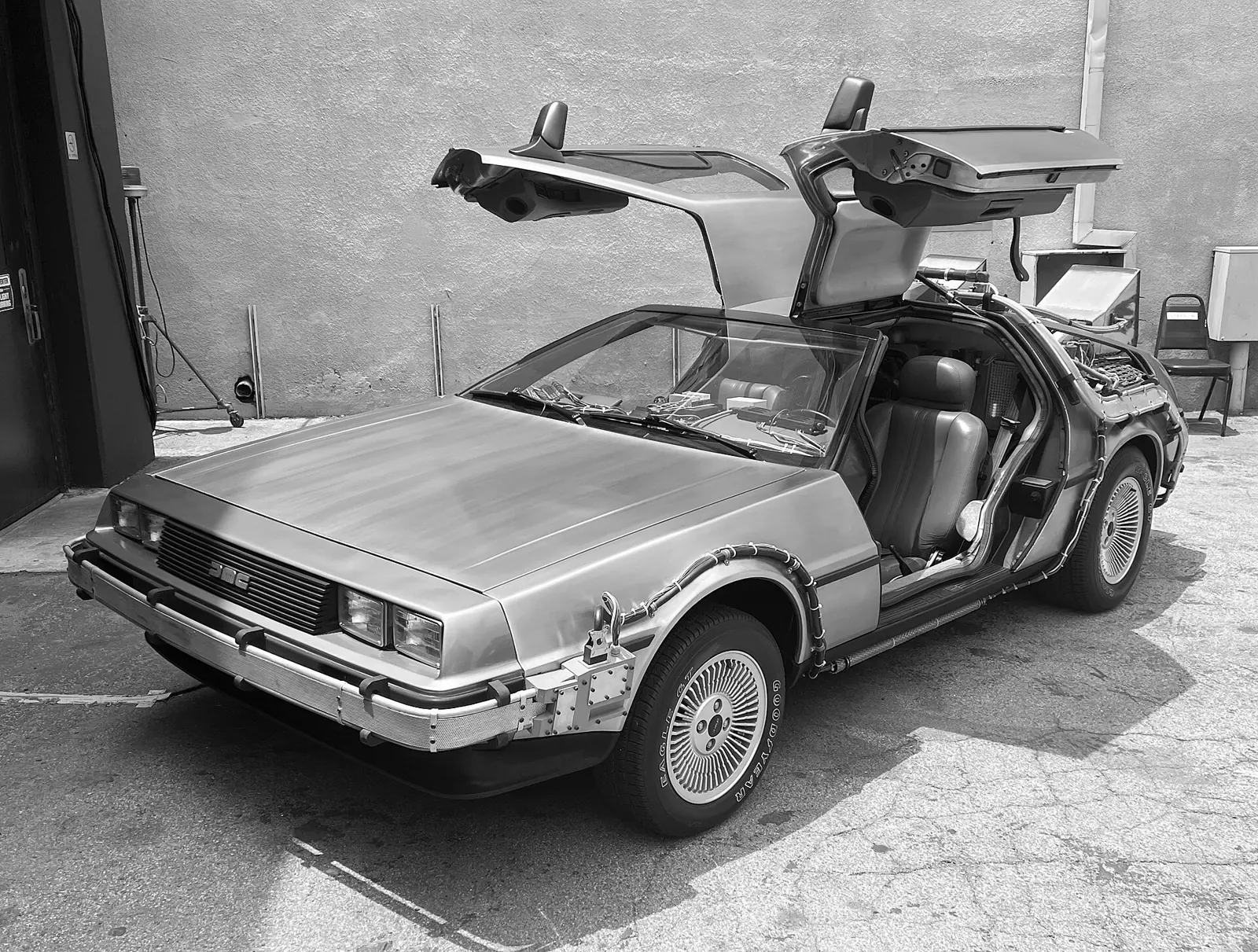
The script for Back to the Future (1985) got three notes from Sid Sheinberg, the head of Universal. Professor Brown should be Doc Brown. The Doc's chimpanzee should be a dog. And the movie should be called Spaceman from Pluto.
The first two notes were taken, and today you can't imagine the film without them. The third sent the team into a panic. Producer Steven Spielberg's way out became a classic: he wrote Sheinberg a short reply thanking him for his hilarious note and saying everyone had had a good laugh. According to Bob Gale, one of the writers, Sheinberg was too proud to admit he'd been serious, and the title stayed.
The lesson works on two levels. First, two out of three notes from the same person can be good. A bad note is no reason to write off the person who gave it. Second, the way to turn down a note isn't to embarrass the person who gave it. It's to leave them a door they can back out through.
FourThe fight the writer lost, and was lucky to lose
Robert Towne's screenplay for Chinatown (1974) always ranks near the top of lists of the greatest screenplays ever written. But the most talked-about part of the film, its ending, isn't the one Towne wrote.
In Towne's original version, Evelyn Mulwray kills her father, Noah Cross, and evil pays a price. Roman Polanski wanted something far darker: Evelyn dies, Cross takes away the young girl Evelyn has been trying to protect, and Gittes, the detective, has to accept that there's nothing he can do. The two men fought over almost every line, and things got so tense between them that Polanski reportedly kept Towne off the set.
What people remember about Chinatown today is that dark ending and the famous line that closes it. Towne won an Oscar for the script. In other words, a screenwriter won an award for the result of a fight he lost. The story tells us something uncomfortable: the screenwriter isn't always the best judge of their own story. Sometimes the note you fight hardest is the one that makes the film.
FiveThe actor's note: a two-word revision
The Empire Strikes Back (1980). Han Solo is about to be frozen in carbonite when Leia tells him she loves him. In the script, Han's answer was probably something like “I love you too.” At Harrison Ford's suggestion, it became “I know.” The director, Irvin Kershner, went with it, and those two words became one of the most quoted lines in the whole saga.
The story shows exactly why actors' notes deserve to be taken seriously. You've spent months with the character, but in that moment the actor is living inside the character's skin. Sometimes they know the character better than you do. In that scene, at least.
Of course, not every actor's note is that innocent. Turkish television knows this one well: an actor may want a bigger part, want their character to always turn out to be right, or want to be cut from a scene that would make them unlikable. When you read those notes, ask the same question: is the actor speaking for the character, or for their own image?
SixThe audience's note: the test screening
Fatal Attraction (1987) originally had a dark ending. Alex takes her own life and sets up her death so that Dan will be blamed for it. Test audiences hated it. They wanted Alex punished. So the studio shot a new ending, in which Dan's wife shoots Alex in the bathroom of their house. Glenn Close reportedly fought the change. The film was a huge box-office hit.
The story of Pretty Woman (1990) is even more striking. J. F. Lawton's original script was a dark drama about a sex worker's life and her addiction. Over the course of the rewrites, it turned into the romantic comedy we know today.
There's no single right answer for these two. Commercially, both were huge successes. Artistically, people are still arguing about both. Maybe the lesson is this: whether a note is right depends on what you're aiming for. A note that's right for the box office can be wrong for the soul of the film. What matters is making that choice with your eyes open.
Every note is aiming at something. Before you take it, ask whether it's aiming at the same thing you are.
SevenEgo at the table: the people-pleaser and the writer who rejects everything
In revision, screenwriters tend to fall into one of two traps. The first is the people-pleaser. They say yes to every note, because they want to be liked, they want the next job, and they don't want a reputation for being difficult. This writer will sometimes cut the truest parts of the story just because somebody didn't like them.
The second is the writer who rejects everything. Every note feels like an attack. They are so attached to their own pages that they'll turn down even a good note purely because of who gave it. This writer is sometimes right, but after a while nobody listens to them, even when they are.
The cure for both is the same: separate the note from the person who gave it. Ask yourself: what would I think if this note came from a screenwriter I respect instead of someone I can't stand? Or turn it around: what if it came from a stranger instead of someone I love?
Pixar's “Braintrust,” the meetings its creative team relied on for years, built that separation into the company itself. As Ed Catmull tells it, the notes given in those meetings weren't binding. The director listened to them but made the call. That made the people giving notes more honest and the people getting them less defensive.
EightRevision discipline
When the notes come in, there's a simple routine we follow before we reply.
Sleep on it
Don't write back in the first hour after reading the notes. Your first reaction is almost always defensive. Get a night's sleep and read them again in the morning.
Make one list
Merge everyone's notes into a single list. Notes that describe the same problem in different words often point to the same scene. If three people complain about the same scene, however different their fixes, that scene has a problem.
Sort them into three piles
The ones to do right away, the ones where you need to find the note behind the note, and the ones worth fighting for. Keep that last pile as small as you can. A writer who goes to war over every note never wins a war.
Keep a record
Write down what changed in each version. In the business, changes to a shooting script are tracked with colored pages: white first, then blue, pink, yellow, green and goldenrod. Bring the same discipline to your own drafts. Six months from now, when the producer asks, “What was that scene in the first version?” you'll have the answer ready.
NineRules from the desk
- Rule
Listen to the symptom, write the prescription yourself.
The problem a note names is often real. The fix it suggests often isn't.
- Rule
Separate the note from the person who gave it.
Someone you like can be wrong. Someone you don't like can be right. Look at the pages, not the person.
- Rule
Leave a bad note a door.
When you turn a note down, let the person who gave it save face. Give them a way to back out.
- Rule
Take the actor's note seriously.
But ask: is it for the character, or for their own image?
- Rule
Ask what the note is aiming for.
Box office, network policy, an actor's image, the soul of the story. Every note serves some goal. Is it the same as yours?
- Rule
Pick the hill worth dying on.
In each round of revisions, be ready to really dig in on one or two things at most. Stay flexible on the rest.
- Rule
Don't forget the fight you lost.
Sometimes the change you fought hardest is the change that makes the film. Remember Chinatown.
LastThe moment the script meets other people
Revision is where the writer's solitude ends. That stings a little, because you're no longer the only owner of the text. But it's also a relief, because you're no longer the only one carrying the story.
Next time a note comes in, write your first reaction on a piece of paper and set it aside. Then read the note again. This time, forget who wrote it.